
Subtotal $0.00

Alcohol Dependence Symptoms & Treatment – Psychiatric Doctor in Guntur

Alcohol Dependence in Modern Society
In today’s fast-paced lifestyle, alcohol use has become increasingly common. What often begins as social drinking, curiosity, or a way to relieve stress can gradually turn into alcohol dependence without the person realizing it.
Many individuals believe they are in control, but over time, alcohol starts controlling their thoughts, behavior, and daily routine. Early awareness of alcohol dependence symptoms is essential to prevent long-term physical and mental health complications.
“Starts as a habit… slowly becomes a need.”
How Alcohol Dependence Develops
Alcohol dependence does not happen overnight. It develops gradually due to a combination of psychological, social, and biological factors.
Common reasons people start drinking include:
Social influence and peer pressure
Work stress and emotional struggles
Curiosity or experimentation
Over time, the brain begins to associate alcohol with relief and comfort. This creates a cycle where a person increasingly relies on alcohol to cope with stress or emotions.
As dependence grows, a person may:
Increase the quantity of alcohol consumed
Feel the urge to drink regularly
Find it difficult to stop or cut down
“Initially for fun… later becomes a habit.”
Alcohol Dependence Symptoms
Recognizing early symptoms can help in seeking timely treatment. Some of the most common alcohol dependence symptoms include:
Drinking more than intended
Strong cravings or urges to drink
Loss of control over alcohol intake
Developing tolerance (needing more alcohol for the same effect)
Experiencing withdrawal symptoms (irritability, anxiety, sweating)
Neglecting personal, social, or professional responsibilities
Continuing to drink despite knowing its harmful effects
If a person feels they cannot stop even when they want to, it is a strong warning sign of dependence.
“If you want to stop but can’t… it’s a signal, not a weakness.”
Thoughts That Lead to Alcohol Use
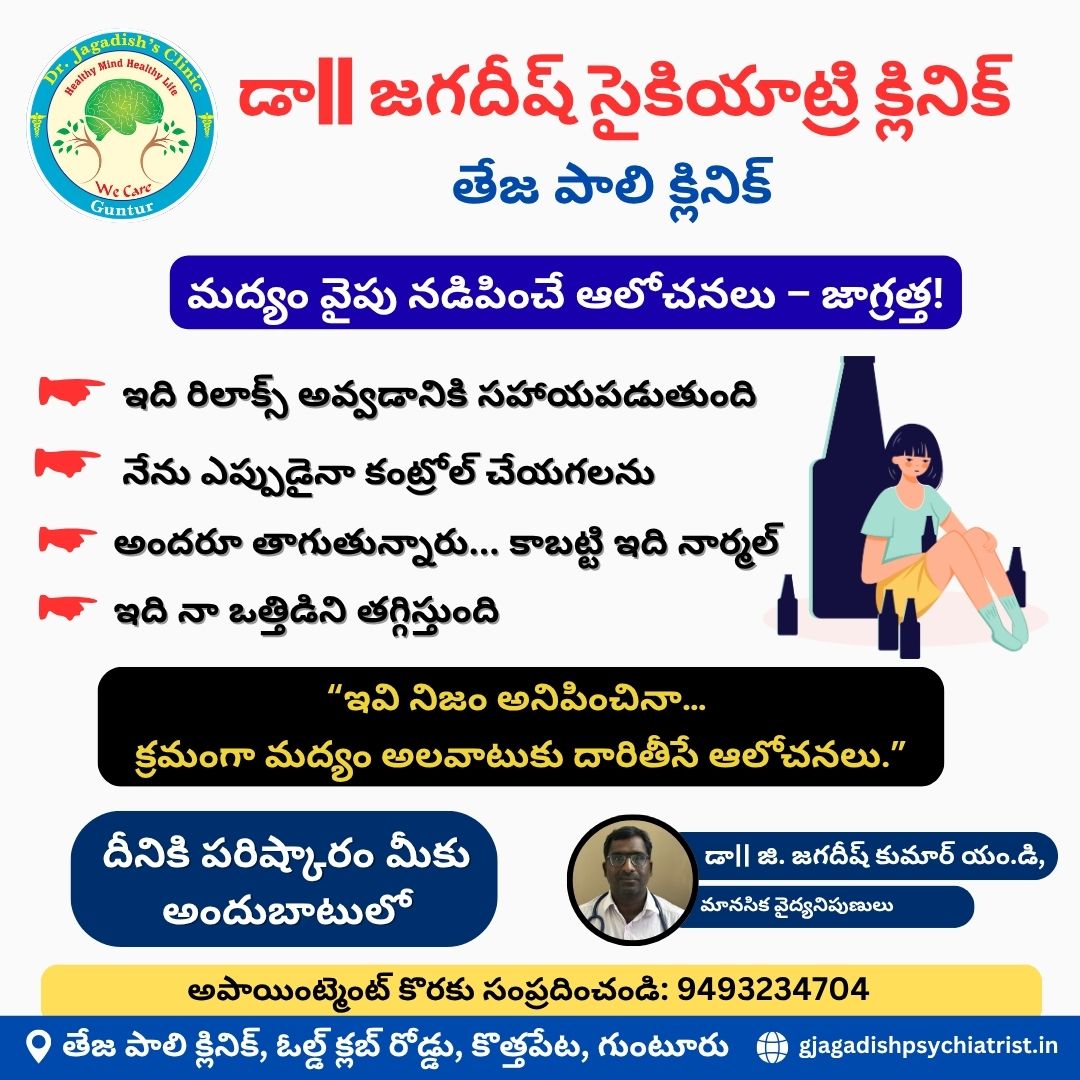
Many people justify drinking with certain beliefs, which can unknowingly reinforce dependence:
“It helps me relax”
“I can control it anytime”
“Everyone drinks, so it’s normal”
“It reduces my stress”
While these thoughts may feel true in the moment, they can gradually increase reliance on alcohol and delay recognition of the problem.
“Seemingly harmless thoughts can slowly build harmful habits.”
Effects of Alcohol Dependence
Alcohol dependence affects multiple aspects of life:
Physical Health:
Liver damage
Fatigue and weakened immunity
Mental Health:
Anxiety and depression
Mood swings and irritability
Poor concentration
Social & Professional Life:
Relationship conflicts
Reduced productivity
Financial and legal issues
“Alcohol gives temporary relief… but causes long-term damage.”
Warning Signs to Watch
It is important to identify warning signs early:
Drinking more frequently than before
Inability to control or reduce drinking
Feeling restless without alcohol
Ignoring responsibilities and priorities
Recognizing these signs early can prevent serious health and life consequences.
Moving Toward Healthy Thinking
Changing thought patterns is a key step in overcoming alcohol dependence.
Healthy alternatives include:
“I can manage stress in better ways”
“My health and family matter more”
“Seeking help is a strength, not a weakness”
Developing healthier coping strategies such as exercise, relaxation techniques, and counseling can significantly improve mental well-being.
“When thoughts change… habits follow.”
Consult a Psychiatric Doctor in Guntur
If you or your loved one is experiencing alcohol dependence symptoms, early intervention can make a significant difference. Professional help from a qualified psychiatrist can provide proper diagnosis, counseling, and treatment.
You can consult
Dr G Jagadish Kumar, MD (Psychiatry)
at Dr Jagadish Kumar Psychiatry Clinic
c/o Teja Polyclinic, Old Club Road, Kothapet, Guntur
A psychiatric doctor can help with:
De-addiction counseling
Behavioral therapy
Medication (if required)
Long-term relapse prevention strategies
“Timely help can transform lives.”
Final Message
Alcohol may appear to be a solution for stress or emotional pain, but in reality, it often creates bigger problems. Awareness, early identification of symptoms, and professional support are key to recovery.
“Alcohol is not a solution… it becomes the problem.”
Choose health. Choose control. Take the first step toward recovery today.