
31 October 2026
Workplace Burnout: Symptoms, Causes & Management
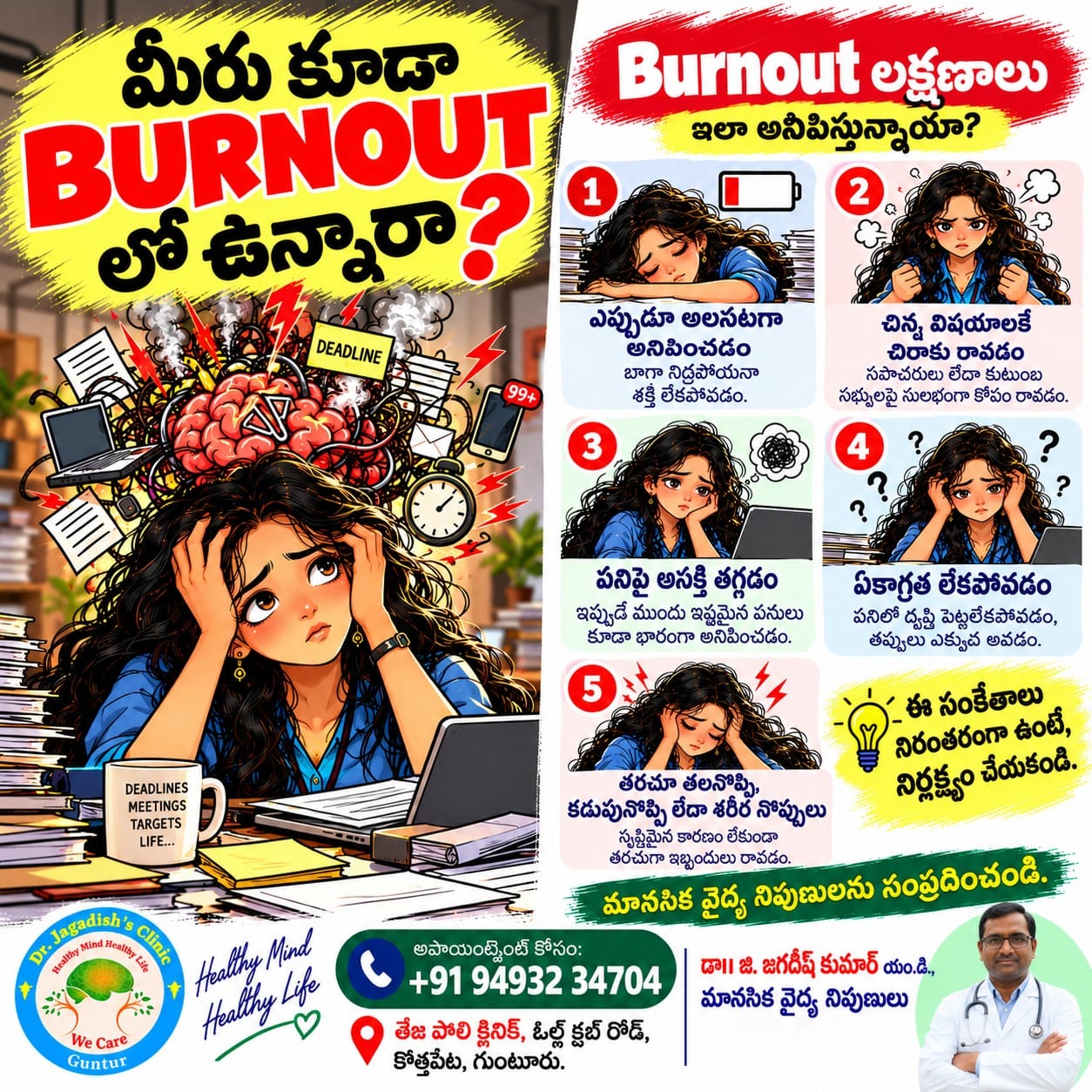
# Workplace Burnout: 5 Common Symptoms, Causes, and Effective Ways to Manage It
**Focus Keyword:** Workplace Burnout **Secondary Keywords:** Work Stress Management, Burnout Symptoms, Mental Health at Work, Psychiatrist in Guntur
## What Is Workplace Burnout?
Are you feeling mentally exhausted because of work pressure? Do you feel tired even after resting, or have you lost interest in activities you once enjoyed? These may be signs of **workplace burnout**, a condition associated with prolonged and poorly managed work-related stress.
Today's demanding work schedules, family responsibilities, tight deadlines, and pressure to achieve professional goals can affect mental well-being. Burnout is not laziness or a lack of motivation. It may be a sign that your workload, working environment, and need for rest require attention.
## 5 Common Symptoms of Workplace Burnout
Recognizing burnout symptoms early can help you take appropriate steps to protect your mental health.
### 1. Constant Physical and Mental Exhaustion You may feel tired even before starting work. Despite getting enough rest, you might continue to experience low energy, emotional exhaustion, and difficulty managing daily responsibilities.
### 2. Increased Irritability Work pressure can reduce your patience and make you more irritable with colleagues, friends, or family members. Minor problems may begin to feel overwhelming.
### 3. Loss of Interest in Work Tasks that once motivated you may start feeling boring or exhausting. You might experience reduced enthusiasm, emotional detachment, or a lack of satisfaction in your professional life.
### 4. Difficulty Concentrating Workplace burnout may affect your ability to focus, make decisions, and complete tasks efficiently. You may notice more mistakes, reduced productivity, and difficulty organizing your responsibilities.
### 5. Sleep Problems and Personal Life Difficulties Thinking about work even after office hours can interfere with sleep and relaxation. You may spend less time with family, avoid social activities, or lose interest in hobbies.
These symptoms can also occur with depression, anxiety, sleep disorders, and other health conditions. Avoid self-diagnosis and seek professional advice when symptoms persist.
## Difference Between Stress and Burnout
Stress is a natural response to challenges, responsibilities, or demanding situations. It may be temporary and improve when the problem is resolved.
Burnout, however, is associated with prolonged work-related stress and may involve persistent exhaustion, increased mental distance from work, and reduced professional effectiveness.
Not every stressful situation leads to burnout. However, ignoring ongoing work pressure may worsen emotional exhaustion and affect overall well-being.
## How to Manage Workplace Burnout Effectively
### 1. Maintain a Healthy Work-Life Balance Take short breaks during working hours and establish clear boundaries between professional responsibilities and personal time.
### 2. Prioritize Your Tasks Organize tasks according to their importance and deadlines. Break large assignments into smaller, manageable steps instead of trying to complete everything at once.
### 3. Improve Your Sleep Routine Maintain a consistent sleep schedule and reduce work-related messages and screen time before bedtime. Adequate rest supports emotional well-being and concentration.
### 4. Ask for Help When Needed If your workload becomes overwhelming, communicate with your manager or colleagues. Discuss realistic deadlines, share responsibilities where possible, and seek support instead of handling everything alone.
### 5. Make Time for Personal Well-Being Spend quality time with family and friends. Activities such as walking, regular exercise, hobbies, and relaxation can help you manage everyday stress.
### 6. Do Not Ignore Persistent Symptoms Continuous fatigue, sleep difficulties, irritability, or reduced concentration should not automatically be attributed to work pressure. Medical evaluation may help identify the underlying cause.
## How Can Organizations Prevent Workplace Burnout?
Preventing burnout is not solely the employee's responsibility. Organizations also play an important role in supporting workplace mental health.
Employers can help by:
- Providing fair workloads and setting realistic performance targets. - Encouraging regular breaks and allowing employees to use their leave. - Promoting a respectful workplace culture and reducing humiliation or constant criticism. - Creating a safe environment where employees can discuss concerns without fear. - Improving mental health awareness and encouraging access to professional support when needed.
A healthy workplace should support employees' productivity while protecting their physical and emotional well-being.
## When Should You Consult a Mental Health Professional?
Consider consulting a mental health professional if persistent exhaustion, irritability, sleep problems, loss of interest, or concentration difficulties begin affecting your work, relationships, or daily activities.
Burnout-like symptoms may sometimes be associated with depression, anxiety, or other medical conditions. A professional assessment can help identify the possible cause and guide appropriate treatment or support.
## Conclusion: Prioritize Your Mental Health
Your well-being is just as important as your professional achievements. Continuously sacrificing your sleep, health, and family time for work is not a sustainable approach to success.
Taking breaks is not a weakness, and asking for help is a responsible step toward better mental health. Recognizing workplace burnout early can help you develop healthier habits, improve work-life balance, and protect your long-term well-being.
### Mental Health Support in Guntur
**Dr. Jagadish's Psychiatry Clinic** **Dr. G. Jagadish Kumar, M.D.** Consultant Psychiatrist Teja Polyclinic, Old Club Road, Kothapet, Guntur **Phone:** 94932 34704 **Website:** www.gjagadishpsychiatrist.in
If work-related stress is affecting your daily life, consider seeking professional guidance.