
15 September 2026
How to Handle Lack of Insight in Mental Health Problems?
Understanding Lack of Insight and the Right Way to Respond
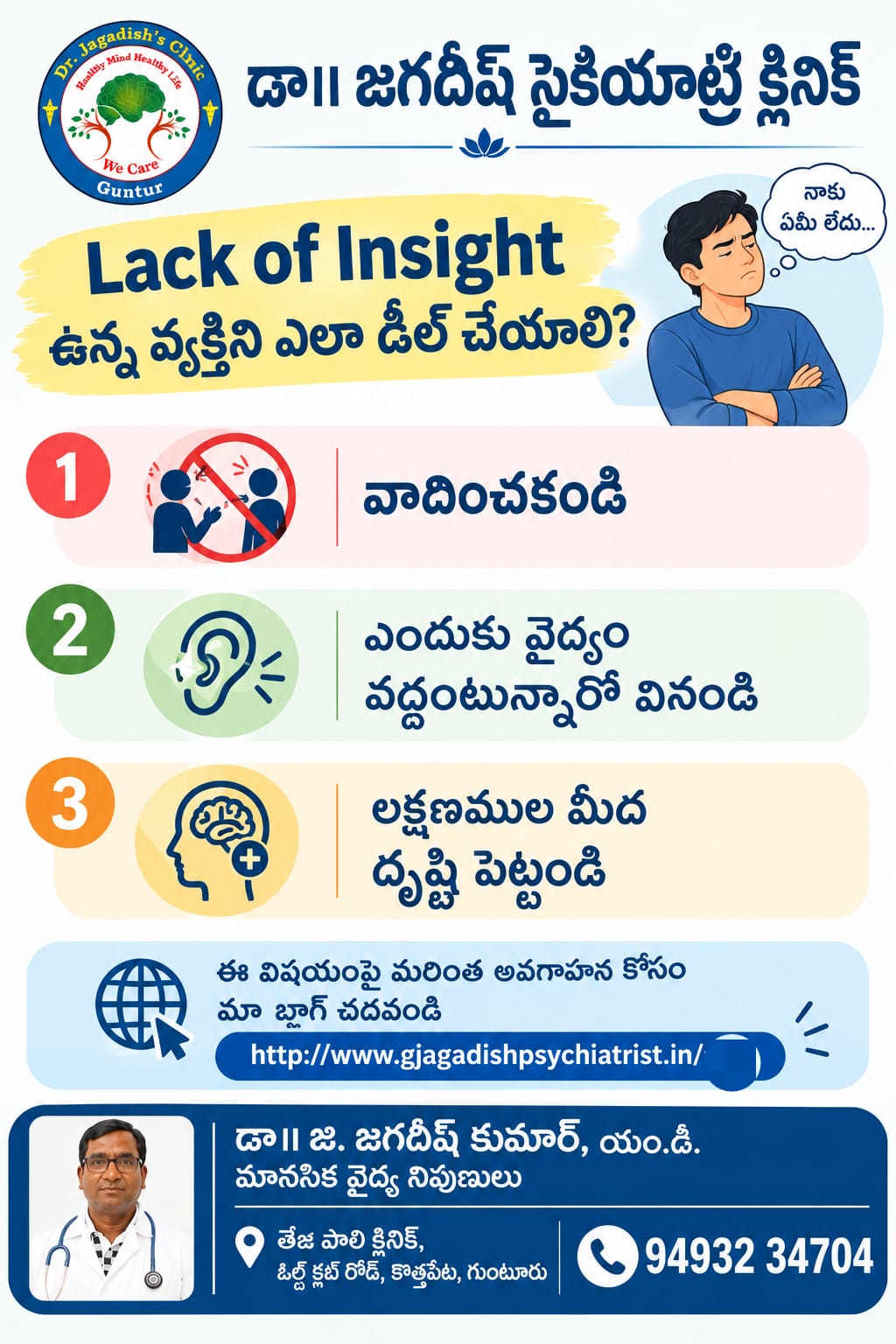
# How to Handle Lack of Insight in Mental Health Problems?
In some mental health conditions, a person may not accept or recognize that they are experiencing a problem. They may say, “There is nothing wrong with me,” “I do not need treatment,” or even believe that other people are the problem. This difficulty in recognizing one’s own mental health condition is known as **Lack of Insight**.
Lack of insight is not always simply stubbornness or deliberate refusal to accept treatment. In certain mental health conditions, the illness itself can affect a person’s ability to recognize that their thoughts, behavior, or situation may be unusual. As a result, convincing them that they need professional help can become challenging for family members.
## How Can Family Members Deal With Lack of Insight?
### 1. Avoid Arguments
Repeatedly telling someone, “You have a mental health problem,” or arguing with them about their condition may make the situation worse. Arguments can increase resistance, frustration, and conflict.
Instead of trying to prove that they are wrong, family members should focus on maintaining a calm and supportive environment.
### 2. Talk Without Criticizing
Communication plays an important role when dealing with someone who has a lack of insight. Avoid blaming, criticizing, or embarrassing the person.
Speak calmly about the difficulties they are experiencing. A supportive conversation can make them feel heard rather than judged and may gradually increase their willingness to seek help.
### 3. Listen to Their Concerns
Try to understand **why the person does not want treatment**. There may be several reasons behind their refusal. They may be worried about medication side effects, afraid of treatment, influenced by misconceptions, or simply lack awareness about their condition.
Listening to these concerns instead of immediately dismissing them can help build trust.
### 4. Focus on the Problems They Are Experiencing
Rather than repeatedly saying, “You have a mental illness,” family members can focus on the specific difficulties affecting the person’s daily life.
For example, conversations can focus on **sleep problems, anxiety, anger, suspiciousness, or difficulties in everyday activities**. Discussing these concerns may be more acceptable to the person and can create an opportunity to seek professional help.
### 5. Encourage a Psychiatric Assessment
Even if the person does not accept that they have a mental health condition, try to create an opportunity for them to speak with a mental health professional.
A **psychiatric assessment** can help a qualified professional understand the person’s concerns and difficulties. Family members can encourage the individual to have a conversation with a professional without making the experience feel like an accusation or punishment.
### 6. Share Relevant Information With the Psychiatrist
Family members can provide valuable information during a psychiatric assessment. Along with what the individual reports, relatives may have observed changes in behavior that the person may not recognize or mention.
Changes in sleep, anger, suspiciousness, daily functioning, or other behaviors can be important for the psychiatrist to understand the overall situation.
### 7. Do Not Delay Help When There Is a Risk
There are situations where immediate professional assistance is important. If there is a risk of the person harming themselves or others, severe confusion, uncontrollable aggression, or severe mental distress, family members should seek professional help without delay.
## Why Trust Matters
When someone has a lack of insight, forcing them to accept that they have a mental health condition may not always be effective. Building trust, listening to their concerns, communicating without criticism, and focusing on the difficulties they are actually experiencing can be more helpful.
The important message for families is simple: **Even if a person does not accept that they have a problem, their difficulties should not be ignored.** Creating an opportunity for professional assessment at the right time can be an important step toward appropriate care.
If you are concerned about changes in a family member’s thoughts, behavior, sleep, anger, suspiciousness, or daily functioning, consider seeking guidance from a qualified mental health professional.
**Dr. G. Jagadish Kumar, M.D.** Consultant Psychiatrist Teja Polyclinic, Old Club Road, Kothapet, Guntur Phone: 94932 34704