
29 September 2026
Anxiety in India: Breaking Myths and Promoting Early Recognition
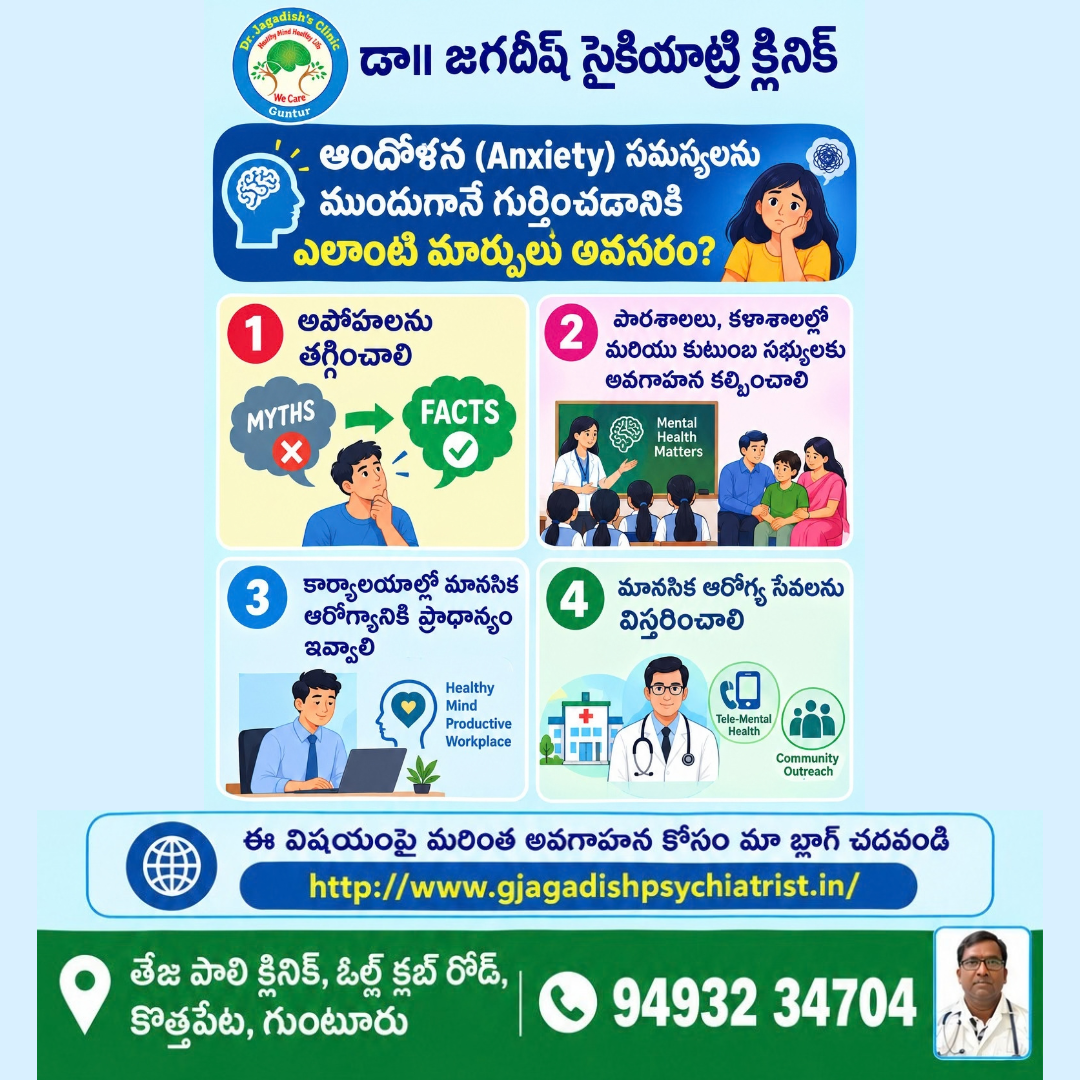
Anxiety in India: Breaking Myths and Promoting Early Recognition
**Anxiety** is increasingly becoming an important mental health concern. Academic pressure, workplace stress, family responsibilities, financial difficulties, and health concerns can contribute to emotional stress and anxiety. While occasional anxiety is a normal response to stressful situations, persistent or difficult-to-control anxiety that affects sleep, daily activities, or relationships may require professional evaluation.
Improving **anxiety awareness in India** requires more than individual understanding. Families, schools, workplaces, healthcare providers, media, and communities all have a role in encouraging early recognition and appropriate support.
## 1. Reduce Mental Health Stigma
Anxiety is sometimes misunderstood as a sign of weakness, lack of courage, or a personality problem. Such misconceptions can prevent people from discussing their symptoms or seeking professional help.
Public awareness should explain that seeking help for anxiety is not a weakness. Creating respectful and open conversations about mental health can encourage people to seek support earlier.
## 2. Promote Mental Health Awareness in Schools and Colleges
Children and young adults may experience anxiety because of examinations, academic pressure, peer relationships, and family expectations. Anxiety may appear as changes in behaviour, reduced interest in studies, sleep problems, or reluctance to attend school.
Schools and colleges can support **early anxiety recognition** by providing age-appropriate mental health education. Teachers can receive basic training to recognize possible warning signs, while students should have confidential ways to discuss their concerns and access counselling or medical services when required.
## 3. Encourage Early Identification in Primary Healthcare
People experiencing anxiety may initially visit a general physician because of physical symptoms such as headaches, rapid heartbeat, chest discomfort, stomach problems, or sleep difficulties. These symptoms can also have physical causes, so appropriate medical evaluation is important.
When necessary, primary healthcare providers should also consider psychological factors and refer patients to mental health professionals for further assessment.
## 4. Improve Family Awareness and Support
Family support can make an important difference. Simply telling someone to “stop worrying” or “be strong” may not address what they are experiencing.
Instead, family members should listen without criticism, avoid comparisons and humiliation, take concerns seriously, and encourage professional help when appropriate.
## 5. Make Workplace Mental Health a Priority
Work pressure, excessive workload, job insecurity, and workplace conflicts can contribute to anxiety. Employees may also hesitate to seek help because they fear negative consequences at work.
Organizations can promote workplace mental health through awareness programs, confidential counselling services, supportive policies, and measures to address excessive workload, harassment, and discrimination.
## 6. Expand Mental Health Services in Rural Areas
Access to mental health professionals can be challenging in some rural communities because of distance, cost, and limited availability of specialized services.
Strengthening mental health services at primary health centres and district hospitals, increasing awareness of tele-mental health services, and providing information in local languages can improve accessibility.
## 7. Promote Responsible Mental Health Information
Television, newspapers, and social media can help increase **mental health awareness**, but inaccurate information can also create confusion and stigma.
People should receive medically accurate information about anxiety symptoms and available support. Awareness campaigns should discourage self-diagnosis based on individual symptoms and encourage people to consult reliable healthcare sources.
## 8. Improve Awareness About Anxiety Treatment
Some people believe that consulting a psychiatrist automatically means taking medication for life. In reality, treatment depends on the individual's symptoms, severity, duration, and needs.
Depending on the situation, a doctor may recommend psychotherapy, lifestyle changes, medication, or a combination of approaches. Clear information about treatment options can help reduce fear and misconceptions.
## 9. Recognizing Anxiety Early
Possible signs that deserve attention include:
* Persistent worry or excessive overthinking * Fear that something bad may happen * Rapid heartbeat, sweating, or trembling * Sleep difficulties * Poor concentration or increased irritability * Difficulty managing work, studies, or family responsibilities
These symptoms alone do not confirm an anxiety disorder. A professional assessment considers their duration, severity, impact on daily life, and other possible causes.
## Conclusion
Reducing anxiety stigma and promoting **early recognition of anxiety** in India requires coordinated efforts from families, educational institutions, workplaces, healthcare providers, and communities. Better awareness and accessible mental health services can help people seek appropriate support at the right time.
Anxiety does not need to be hidden. Recognizing persistent symptoms and seeking professional guidance can be an important step toward better mental health and overall well-being.
**Dr. G. Jagadish Kumar, M.D. – Consultant Psychiatrist** **Dr. Jagadish's Psychiatry Clinic** Teja Polyclinic, Old Club Road, Kothapet, Guntur 📞 94932 34704 🌐 gjagadishpsychiatrist.in