
9 October 2026
Anxiety and Heart Palpitations: Why Does Anxiety Increase Your Heart Rate?
Anxiety and Heart Palpitations: Causes and Symptoms
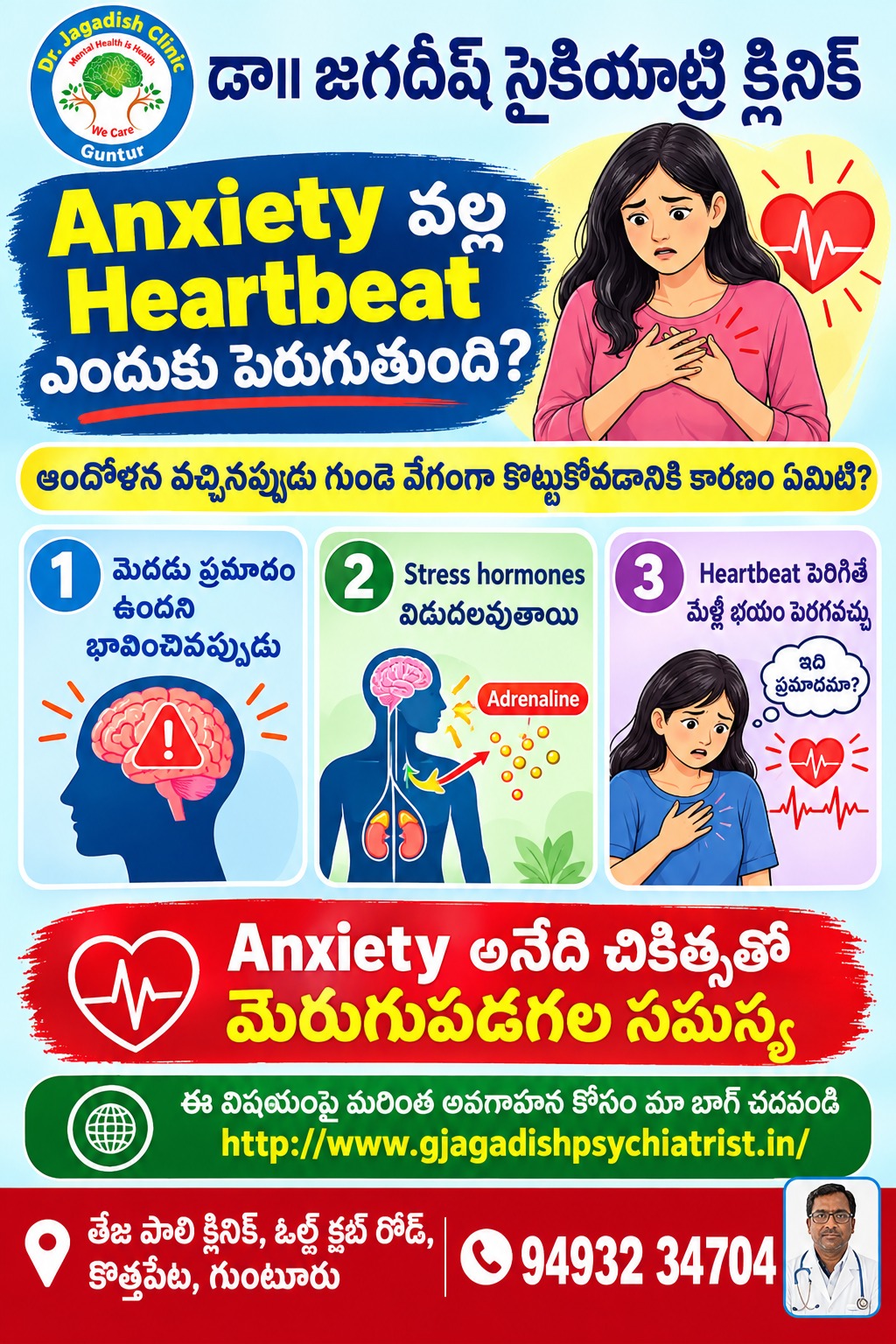
Anxiety and Heart Palpitations: Why Does Anxiety Increase Your Heart Rate?
Focused Keyword: Anxiety and Heart Palpitations Secondary Keywords: Anxiety symptoms and rapid heartbeat, anxiety causing heart palpitations, Psychiatrist in Guntur
Introduction
Have you ever noticed your heart beating faster when you feel anxious, stressed, or frightened? Anxiety and heart palpitations often occur together. Some people may experience a racing heartbeat, sweating, rapid breathing, or restlessness during periods of anxiety.
These physical symptoms can feel frightening, especially when they appear suddenly. Understanding why anxiety affects your heartbeat can help you manage stress and recognize when medical attention may be necessary.
## Why Does Anxiety Cause Heart Palpitations?
Anxiety activates the body's natural stress response, preparing you to respond to a perceived threat. Even when there is no immediate danger, your brain may trigger this response when you feel worried, nervous, or overwhelmed.
Here are three important reasons why anxiety can increase your heart rate.
### 1. The Brain Activates the Stress Response
When you experience fear or anxiety, certain parts of your brain signal that a potential threat may exist. This activates the body's fight-or-flight response, preparing you to react quickly.
As a result, your heart may beat faster to help deliver blood throughout your body.
### 2. Stress Hormones Are Released
During anxiety, the body releases stress hormones such as adrenaline. These hormones prepare your body to respond to a stressful situation.
You may experience several physical symptoms, including:
* A fast or pounding heartbeat
* Sweating or trembling
* Rapid breathing
* Restlessness or a feeling of uneasiness
These symptoms may occur even when you are not facing an actual physical threat.
### 3. A Fast Heartbeat Can Increase Anxiety
Sometimes, anxiety and heart palpitations can create a cycle. When you notice your heart beating rapidly, you may worry that something is wrong with your heart.
This fear can increase your anxiety, which may make your heartbeat feel even faster. Understanding this cycle can help you recognize how physical sensations and anxious thoughts can influence each other.
## Are Heart Palpitations Always Caused by Anxiety?
No. Although anxiety can cause heart palpitations, a fast heartbeat may also occur for other reasons.
Possible causes include:
* Excessive caffeine intake, including tea and coffee
* Lack of sleep
* Anaemia
* Thyroid problems
* Heart rhythm abnormalities, such as arrhythmias
* Certain medications or other health conditions
Therefore, do not automatically assume that anxiety is the cause of your symptoms. A healthcare professional can evaluate your symptoms and recommend appropriate tests when necessary.
## When Should You Seek Medical Help?
Seek emergency medical attention if a racing heartbeat occurs with chest pain, severe difficulty breathing, fainting, or loss of consciousness.
You should also consult a healthcare professional if heart palpitations occur repeatedly, last for an extended period, or begin unexpectedly.
Early evaluation can help identify the underlying cause and determine the appropriate treatment.
## How Can You Manage Anxiety-Related Heart Palpitations?
If anxiety contributes to your symptoms, certain lifestyle practices may help you manage stress and improve your overall well-being.
* Practice slow, comfortable breathing: Focus on breathing gently without forcing deep breaths.
* Reduce excessive caffeine: Limit tea, coffee, and other sources of caffeine if they trigger your symptoms.
* Maintain a regular sleep schedule: Adequate sleep supports emotional and physical well-being.
* Create a calm environment: Sit in a comfortable place when you feel anxious.
* Seek professional support: If anxiety frequently affects your daily life, consult a mental health professional.
These strategies may help manage anxiety, but they should not replace medical evaluation when heart palpitations are persistent or concerning.
## Conclusion
Anxiety and heart palpitations are closely connected because anxiety can activate the body's fight-or-flight response and release stress hormones such as adrenaline. This may cause a faster heartbeat, sweating, and rapid breathing.
However, not every episode of heart palpitations is caused by anxiety. Identifying the underlying cause is important for receiving appropriate care.
If anxiety and a racing heartbeat occur frequently, professional guidance can help you understand your symptoms and explore suitable treatment options.
For mental health support, consult Dr. Jagadish's Psychiatry Clinic at Teja Polyclinic, Old Club Road, Kothapet, Guntur.
* Doctor: Dr. G. Jagadish Kumar, M.D., Consultant Psychiatrist
* Phone: 94932 34704
* Website: [www.gjagadishpsychiatrist.in](http://www.gjagadishpsychiatrist.in)